A VIN check is strongest when you use several databases for different jobs. NHTSA can tell you about unrepaired safety recalls tied to a VIN. NICB VINCheck can show whether participating insurers reported a vehicle stolen and unrecovered or as salvage or flood damaged. NMVTIS adds state title, brand, odometer and certain total-loss or junk/salvage information through approved providers, which commonly charge a small report fee.
No single “free VIN checker” should be treated as the whole history. The useful workflow is identity first, then recall status, then theft/salvage screening, then title-brand data, and finally physical inspection. Save the result date because databases change as states, manufacturers and insurers submit new records.
Step 1: make the VIN agree everywhere on the car
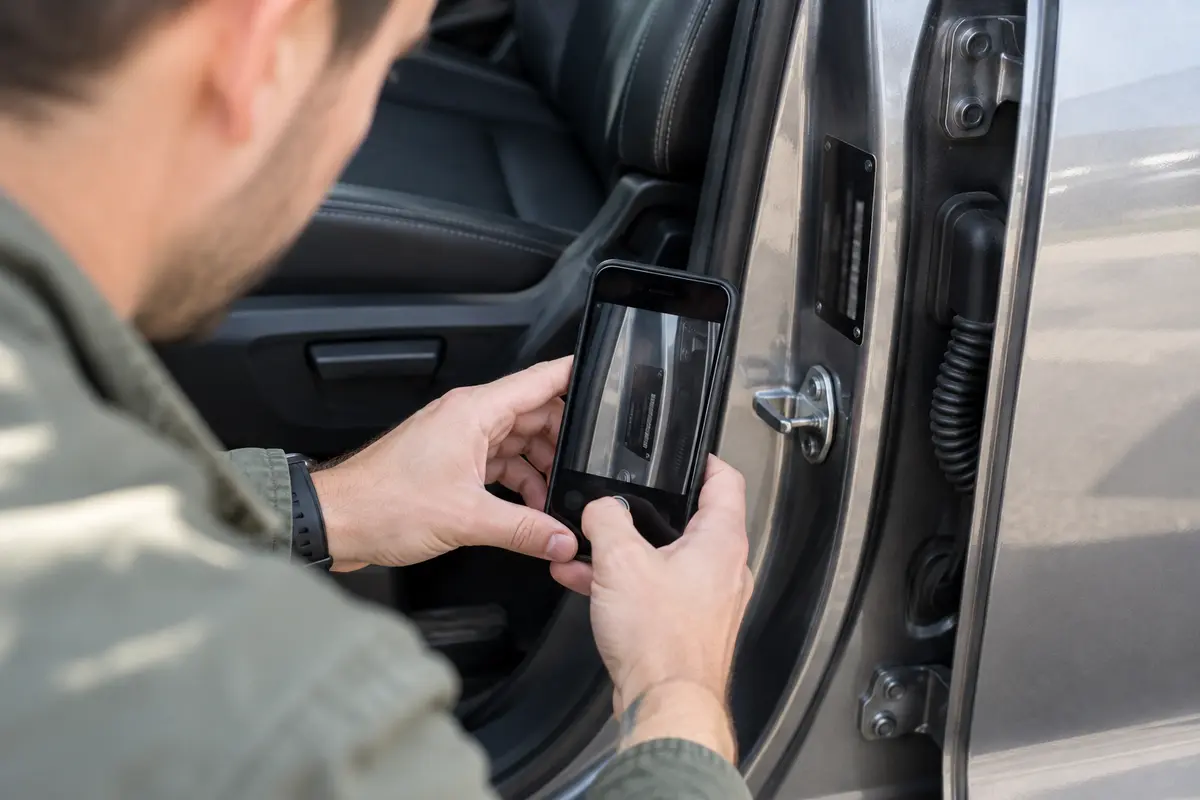
Read the 17 characters through the windshield and compare them with the driver-door label, registration or title and the listing. Type the VIN manually rather than trusting a link sent by the seller. If the public decoder returns a different year or model, stop. A mismatched identity can be an innocent listing error, but it can also signal a cloned VIN, title problem or document mix-up that makes every later database result unreliable.
Step 2: use NHTSA for unrepaired safety recalls
NHTSA’s VIN lookup shows certain unrepaired recalls for the specific vehicle. The agency also explains the limits: repaired recalls are not shown in the VIN result, very recent campaigns may not yet have every VIN identified, and some older or small-manufacturer campaigns can fall outside the display. Save the result and ask a franchised dealer whether the VIN has open campaigns or manufacturer actions. Recall repairs are generally handled by the manufacturer at no charge when the campaign applies.
Step 3: run NICB VINCheck for a different risk
NICB’s free tool is designed to report whether a vehicle was stolen and not recovered or was reported as salvage or flood damaged by participating NICB member insurance companies. That wording matters. A “no record” result is not proof that the car was never flooded or totaled; it means the participating data did not return those records. NICB also limits queries per IP address, so do not burn through searches on casual browsing when you have a shortlist.
Step 4: pay for NMVTIS when title-brand certainty matters
The Department of Justice’s NMVTIS consumer site lists approved public providers. NMVTIS is the more direct source for current state of title, brand history, odometer information and certain insurance/junk/salvage records. The federal site does not itself sell the consumer report; it sends buyers to approved providers. Use it before a private sale, salvage/rebuilt purchase, interstate vehicle or any deal where the title story is not simple.
| Tool | Best question | Important limitation |
|---|---|---|
| NHTSA Recalls | Does this VIN show an unrepaired safety recall? | Not a title or theft database |
| NICB VINCheck | Reported stolen/unrecovered or insurer salvage/flood? | Participating-insurer data; not comprehensive |
| NMVTIS provider | What title brands, odometer and total-loss/junk data exist? | Usually a paid consumer report |
| Independent inspection | What condition is the car actually in today? | Not a database lookup |
Use an open recall as information, not automatic panic
An unrepaired recall should trigger three questions: what is the defect, what interim safety guidance applies, and is the remedy available now? Some recalls have straightforward dealer repairs; others can involve parts delays or operating restrictions. Ask the manufacturer’s dealer to confirm remedy status before purchase. The information can affect timing and convenience and may support negotiation, but do not assume a dealer can legally or practically repair every used vehicle immediately without checking the specific campaign.
Keep a one-page VIN evidence packet
For a car you may buy, save screenshots or PDFs of the NHTSA result, NICB result, NMVTIS report, the listing and the title photo. Add the date and the VIN in the filename. If the seller later substitutes a different car or the title number differs, the packet makes the discrepancy obvious. It also gives your inspector the history clues to target, such as a prior flood brand or a region where corrosion deserves special attention.
What a four-tool result looks like in practice
Suppose NHTSA shows one unrepaired recall, NICB returns no theft or participating-insurer salvage record, and an NMVTIS provider shows a normal current title with no brand history. That is a favorable screen, but it still leaves mechanical condition, unreported collision work and maintenance unanswered. Call the brand dealer with the VIN to ask whether the recall remedy is available, then give the history packet to your inspector. If the seller says the car was recently repaired after “a little parking-lot hit,” ask the inspector to examine that area even though the databases are quiet. The strength of the workflow is division of labor: each tool answers one bounded question. When buyers expect a free VIN website to certify the whole car, they create confidence exactly where the data provider says its coverage is limited.